B.Tech AI&ML
May 30, 2024 2026-03-21 11:53B.Tech AI&ML
Welcome to B.Tech Artificial Intelligence and Machine Learning


B.Tech Artificial Intelligence and Machine Learning
AI and ML bring powerful benefits to organizations of all shapes and sizes, with new possibilities constantly emerging. .
Artificial intelligence is a broad field, which refers to the use of technologies to build machines and computers that have the ability to mimic cognitive functions associated with human intelligence, such as being able to see, understand, and respond to spoken or written language, analyze data, make recommendations, and more. Although artificial intelligence is often thought of as a system in itself. It is a set of technologies implemented in a system to enable it to reason, learn, and act to solve a complex problem.
Machine learning is a subset of artificial intelligence that automatically enables a machine or system to learn and improve from experience. Instead of explicit programming, machine learning uses algorithms to analyze large amounts of data, learn from the insights, and then make informed decisions. Machine learning algorithms improve performance over time as they are trained exposed to more data. Machine learning models are the output, or what the program learns from running an algorithm on training data. The more data used, the better the model will get.
AI and ML bring powerful benefits to organizations of all shapes and sizes, with new possibilities constantly emerging. In particular, as the amount of data grows in size and complexity, automated and intelligent systems are becoming vital to helping companies automate tasks, unlock value, and generate actionable insights to achieve better outcomes.
Industries are using AI and ML in various ways to transform their work and do business. Incorporating AI and ML capabilities into their strategies and systems helps organizations rethink how they use their data and available resources, drive productivity and efficiency, enhance data-driven decision-making through predictive analytics, and improve customer and employee experiences.
Here are some of the most common applications of AI and ML:
- Healthcare and life sciences
- Manufacturing
- Ecommerce and retail
- Financial services
- Telecommunications
Eligibility Criteria for Indian Nationals
- Passed 10+2 examination with physics and mathematics and one of the subjects from the following: –
Chemistry /Computer Science / Electronics /Information Technology /Biology/Informatics Practices / Biotechnology / Technical Vocational subject/Agriculture/Engineering Graphics/ Business Studies/ Entrepreneurship and obtained at least 50% marks (at least 45% marks, in case of candidates belonging to reserved category, EWS & PWD candidates belonging to Maharashtra state only) in the above subjects taken together.
OR
2.Should have passed minimum 3 years Diploma in Engineering and Technology and obtained at least 50% marks (at least 45% marks, in case of reserved categories, EWS & PWD Students belonging to Maharashtra state only);
(The Universities will offer suitable bridge courses such as Mathematics, Physics, Engineering drawing, etc., for the students coming from diverse backgrounds to prepare Level playing field and desired learning outcomes of the programme). 2nd year, in case the vacancies at lateral entry are exhausted.
AND
- Qualifying score in JEE OR MHT-CET OR any other State level Engineering Entrance Exam OR National level Engineering Entrance Exam OR Common University Entrance Test (CUET) OR Symbiosis Engineering Entrance Test (SEET) conducted by SSPU OR Symbiosis International (Deemed) University’s SET Score and Candidate also need to appear for counselling session.
- Candidates will be selected based on their performance in the entrance test conducted by SSPU.
Eligibility Criteria for Foreign/NRI Students
- Passed 10+2 examination with Physics and Mathematics as compulsory subjects along with one of the Chemistry or Biotechnology or Biology or Technical Vocational subject or Computer Science or Information Technology or Informatics Practices or Agriculture or Engineering Graphics or Business Studies or Electronics or Entrepreneurship. Student should have obtained at least 50% marks in the above subjects taken together and must obtain an equivalence certificate from the Association of Indian Universities (AIU).
- The application format is available on AIU website link: https://evaluation.aiu.ac.in/Student/EHome
- All foreign qualifications need to be verified by the AIU by the candidate before seeking provisional admission.
- To promote international understanding between Indian and Foreign candidates, SSPU has reserved seats for NRIs/International candidates in every division (Supernumerary Quota).
- Qualifying score in JEE or Symbiosis Engineering Entrance Test (SEET) conducted by SSPU.
- Candidates will be selected based on the entrance test conducted by SSPU.
- Final approval by internal Equivalence committee of SSPU.
Lateral Entry for Second Year B. Tech. Programmes
Passed Minimum THREE years / TWO years (Lateral Entry) Diploma examination with at least 50% marks (at least 45% marks, in case of reserved categories, EWS & PWD Students belonging to Maharashtra state only) (Respective Council) in ANY branch of Engineering and Technology.
OR
Passed B.Sc. Degree from a recognized University as defined by UGC, with at least 50% marks (at least 45% marks, in case of reserved categories, EWS & PWD Students belonging to Maharashtra state only) as per guidelines of UGC / AICTE / Respective Council) and passed 10+2 examination with Mathematics as a subject.
OR
Passed B. Voc./3yrs, D. Voc. Stream in the same or allied sector. (The Universities will offer suitable bridge courses such as Mathematics, Physics, Engineering drawing, etc., for the students coming from diverse backgrounds to achieve desired learning outcomes of the programme) Refer to table 1.10 of Appendix – 1
Note: Lateral Entry admission will be subject to a minimum of 60%
course mapping and/or as per Annexure I.
- Comprehensive Industry Oriented Curriculum: Well-designed curriculum covering the fundamentals and advanced topics in AI and ML (Generative AI, Deep Learning, Natural Language Processing, Computer Vision, etc.)
- Hands-On/ Skills: More emphasis on practical, skills hands-on approach with real-world projects.
- Expert Faculty: Highly qualified and experienced faculty members with expertise in AI and ML, with significant contribution in research and industry sectors.
- State-of-the-Art Labs: Well-equipped AI and ML laboratories with the latest hardware and software resources.
- Interdisciplinary Approach: Collaborations with other departments to promote interdisciplinary learning, such as combining AI/ML with business, healthcare, or engineering, etc.
- Industry Connections: Partnerships with leading tech companies to provide internships, workshops, and guest lectures from industry experts.
- Hackathons and Technical Event: Frequent conduction of technical activities like hackathons, data science competitions, and coding challenges to foster a competitive and collaborative learning environment.
- Networking Opportunities: Through various outreach programs such as Industry and International collaborative events, conferences, and seminars with professionals in AI and ML across the globe.
- Career Services: Dedicated career services to assist students in securing internships and job placements in AI and ML-related fields.
- Research Mentorship for Higher Education: Opportunities for students to engage in AI and ML research projects to cater their scope for pursing higher education.
| Semester | Subject Code | Subject | Credits |
|---|---|---|---|
| Sem I | AI0101 | Applied Mathematics I | 4 |
| Sem I | AI0102 | Computer Programming and Algorithms | 4 |
| Sem I | AI0103 | Computer Organization and Architecture | 3 |
| Sem I | AI0104 | Introduction to Artificial Intelligence | 3 |
| Sem I | AI0105 | Exploratory Data Analysis | 3 |
| Sem I | AI0106 | Ethics in Artificial Intelligence | 3 |
| Sem I | IDSCUG02 | Career Development Skills | 2 |
| Total Credits | 22 | ||
| Sem II | AI0201 | Applied Mathematics II | 4 |
| Sem II | AI0202 | Data Structures | 4 |
| Sem II | AI0203 | Operating Systems | 3 |
| Sem II | AI0204 | Fundamentals of Machine Learning | 3 |
| Sem II | AI0205 | Python Programming | 3 |
| Sem II | AI0206 | Business Fundamentals | 3 |
| Sem II | IDSC102 | Life Coping Skills | 2 |
| Sem II | AI0207 | Summer Internship | 8 |
| Total Credits | 30 | ||
| Sem III | AI0301 | Database Management Systems | 4 |
| Sem III | AI0302 | Object-Oriented Programming | 3 |
| Sem III | AI0303 | Deep Learning | 3 |
| Sem III | AI0304 | Computational Techniques | 4 |
| Sem III | AI0305 | IoT with Artificial Intelligence | 3 |
| Sem III | AI0306A/B/C | Domain Foundation I (Elective) | 3 |
| Sem III | IDSCUG04 | Career Progression Skills | 2 |
| Total Credits | 22 | ||
| Sem IV | AI0401 | Big Data Analytics | 4 |
| Sem IV | AI0402 | Web Application Development | 4 |
| Sem IV | AI0403 | Introduction to Natural Language Processing | 3 |
| Sem IV | AI0404 | Computer Networks | 3 |
| Sem IV | AI0405 | Software Development and Operations | 3 |
| Sem IV | AI0406A/B/C/D | Domain Foundation II (Elective) | 3 |
| Sem IV | IDSC402 | Career Development Skills | 2 |
| Sem IV | AI0407 | Summer Internship | 8 |
| Total Credits | 30 | ||
| Sem V | AI0501 | Design and Analysis of Algorithm | 4 |
| Sem V | AI0502 | Social Media Analytics | 4 |
| Sem V | AI0503 | Reinforcement Learning | 3 |
| Sem V | AI0504 | Machine Vision | 3 |
| Sem V | AI0505 | Artificial Neural Network | 3 |
| Sem V | AI0506A/B/C/D | Domain Advances I (Elective) | 3 |
| Sem V | IDSC501 | Professional Competency Skills | 2 |
| Total Credits | 22 | ||
| Sem VI | AI0601 | Machine Learning Operations | 4 |
| Sem VI | AI0602 | Data Modelling | 3 |
| Sem VI | AI0603 | Quantum Computing | 4 |
| Sem VI | AI0604 | Cloud Computing | 3 |
| Sem VI | AI0605 | Management & Entrepreneurship for IT Industry | 3 |
| Sem VI | AI0606A/B/C/D | Domain Advances II (Elective) | 3 |
| Sem VI | IDSC601 | Behaviour Skills | 2 |
| Sem VI | AI0607 | Internship | 8 |
| Total Credits | 30 | ||
| Sem VII | AI0701 | Prompt Engineering for Generative AI | 4 |
| Sem VII | AI0702 | Explainable Artificial Intelligence | 4 |
| Sem VII | AI0703 | Web Semantics and Ontology | 3 |
| Sem VII | AI0704 | Research Methodology | 3 |
| Sem VII | AI0705 | Project | 8 |
| Sem VII | IDSC701 | Organizational Skills | 2 |
| Total Credits | 24 | ||
| Sem VIII | AI0801 | Internship | 16 |
| Sem VIII | AI0802 | Seminar | 2 |
| Total Credits | 18 |
Fee Deatils For Indian Student
| (New Admission – 2026-27) | ||||
| Caution Money | Academic Fees | Total Fees | 1st Installments | 2nd Installments |
| At the time of Admission | Due Date – 31-10-2026 | |||
| 10,000 | 3,09,500 | 3,19,500 | 1,72,000 | 1,47,500 |
| (Existing Students-2026-27) | ||||
| Academic Fees | 1st Installments | 2nd Installments | ||
| Due Date – 31-07-2026 | Due Date – 31-10-2026 | |||
| 3,09,500 | 1,62,000 | 1,47,500 | ||
| Hostel Charges | ||
| 1 | 2 Seater Non-AC Rooms | 2,05,000 |
| 2 | Hostel Caution Money (Refundable) | 15,000 |
Fee Details For NRI Student
| (New Admission – 2026-27) | ||||
| Caution Money | Academic Fees | Total Fees | 1st Installments | 2nd Installments |
| At the time of Admission | Due Date – 31-10-2026 | |||
| 10,000 | 3,59,500 | 3,69,500 | 1,97,500 | 1,72,500 |
| (Existing Students-2026-27) | ||||
| Academic Fees | 1st Installments | 2nd Installments | ||
| Due Date – 31-07-2026 | Due Date – 31-10-2026 | |||
| 3,59,500 | 1,87,000 | 1,72,500 | ||
| Hostel Charges | ||
| 1 | 2 Seater Non-AC Rooms | 2,05,000 |
| 2 | Hostel Caution Money (Refundable) | 15,000 |
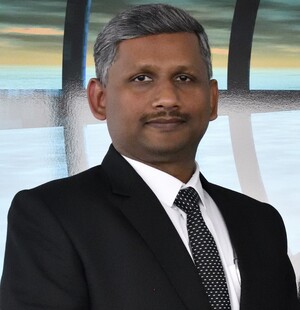
| Office: | E-111, Cabin No. 4 |
| Education Details: | Prof. (Dr.) Jayant Jagtap received the B.E. in Electronics and Telecommunication Engineering from Dr. Babasaheb Ambedkar Marathwada University, Maharashtra in 2008.M.Tech. in Electronics Engineering and Ph.D. in Electronics and Telecommunication Engineering from Swami Ramanand Teerth Marathwada University Nanded, Maharashtra in 2011 and 2017 respectively. |
| Profile: | Dr. Jayant Jagtap is a distinguished academician, researcher, and thought leader in the field of Artificial Intelligence and Machine Learning (AIML). He is currently serving as Professor and Program In-Charge of AIML at the School of Computer Science and Information Technology (CSIT), Symbiosis Skills and Professional University, Pune.With over 15 years of teaching and research experience, Dr. Jagtap has established himself as a pioneer in advancing cutting-edge research and innovation in AI-driven Healthcare, Computer Vision, Medical Image Analysis, and Sustainable AI Applications. Academic & Research Contributions
Professional Engagements & Global Outreach
Recognition & Memberships
Areas of Expertise
|